Poodles are one of the most beloved and versatile dog breeds, known for their intelligence, elegance, and friendly nature. Their distinctive curly coats and charming personalities make them popular companions and show dogs alike. However, owning a Poodle comes with its own set of responsibilities, especially when it comes to grooming, health maintenance, and overall care. Without proper attention to these areas, a Poodle’s wellbeing and comfort can quickly decline.
This comprehensive guide dives deep into the essential aspects of caring for a Poodle, covering everything from their unique grooming needs to common health concerns and practical care tips. Whether you’re a new Poodle owner or someone looking to enhance your knowledge, this article will provide you with the right tools and advice to ensure your Poodle stays healthy, happy, and looking their best year-round.
By understanding the daily, monthly, and seasonal care routines suitable for Poodles, you can prevent many common issues, improve their quality of life, and build a true bond with your furry friend. Let’s explore the best practices that will help you and your Poodle enjoy a long, joyful companionship.
Poodle Grooming Needs: Embracing the Essentials
Regular grooming is fundamental for maintaining a Poodle’s overall health and appearance. Due to their curly and dense fur, Poodles are prone to matting, which can cause discomfort, skin irritations, and infections if not properly managed. Grooming also helps you inspect your dog’s skin for abnormalities or parasites while keeping their coat shiny and healthy.
Maintaining a consistent grooming routine prevents tangles and removes dirt, dead hair, and debris embedded in the coat. This aids in air circulation within the fur, helping to regulate body temperature and reduce unpleasant odors. Moreover, grooming is a useful bonding activity between you and your Poodle, promoting trust and comfort during handling.
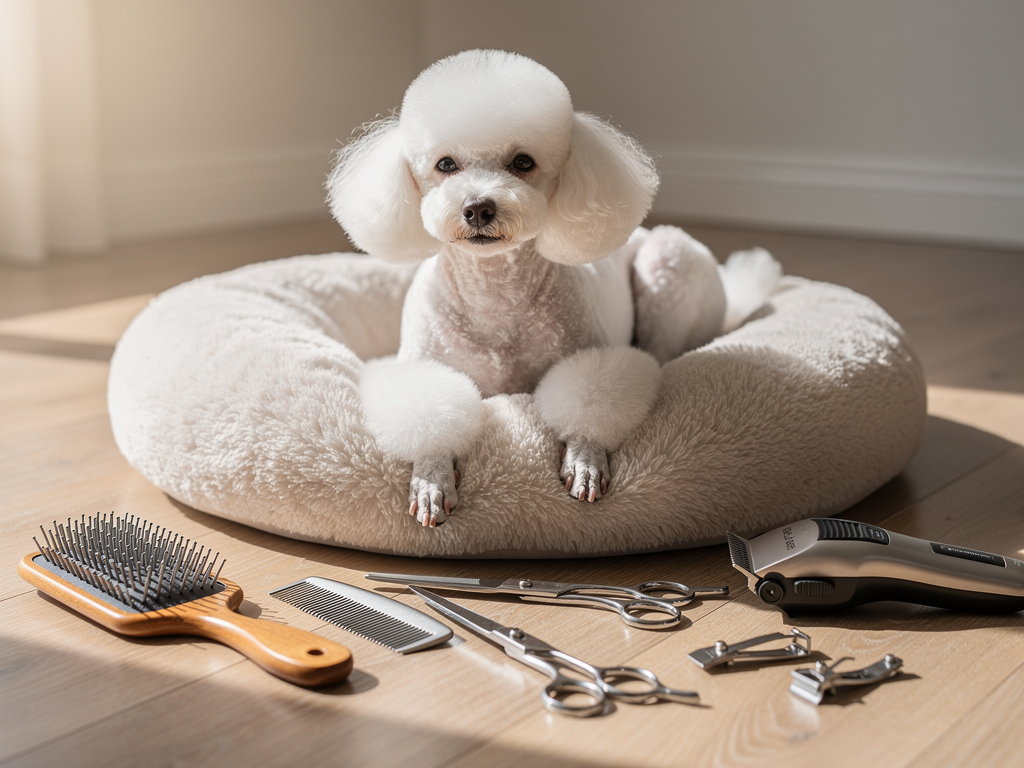
Key grooming tools specifically cater to the Poodle’s unique coat texture and grooming demands:
A slicker brush is an indispensable tool for Poodles. Its fine, short wires are perfect for detangling curly fur and removing loose hair. Using a slicker brush is akin to giving your own hair a gentle detangling massage—it smooths out knots without pulling painfully. Regular use helps prevent mats from forming, especially after outdoor activities or rainy walks.
The steel comb complements the slicker brush with its ability to smooth out finer knots and inspect the skin beneath the coat. Think of it as a finer-tooth comb for your hair that helps discover any hidden tangles or skin issues such as dryness or irritation. The comb is excellent for delicate areas where more precise grooming is needed.
Scissors play an important role in shaping your Poodle’s coat, especially in areas that are hard to reach with clippers, like between the paws, under the ears, and around the face. Scissors act like a barber’s shears, allowing you to create a neat, stylish look or maintain the classic Poodle cut that highlights their unique features.
Clippers are essential for efficiently and evenly trimming a growing Poodle coat. Clippers operate like power tools in grooming – they save time while giving precision and consistency. They come with various blade sizes so you can customize the hair length according to your grooming style or seasonal needs.
Nail clippers should never be overlooked. Keeping your Poodle’s nails properly trimmed avoids pain, overgrowth, and issues with walking or posture. Nail clippers function similarly to human fingernail clippers, preventing discomfort and long nails that could catch on surfaces or cause injury.
Step-by-Step Grooming Tips for Poodles: Daily, Monthly, and Seasonal
A structured grooming schedule is key to keeping your Poodle looking and feeling great. Let’s break down the routine into daily, monthly, and seasonal tasks to match the natural requirements of their coat and skin.
Daily Maintenance Routine
Daily brushing is crucial. Gently brush your Poodle’s fur to eliminate dirt, debris, and prevent matting. Think of this as brushing your own teeth—an essential habit that maintains overall cleanliness and health. Use a slicker brush first to detangle, then follow up with the steel comb for a smooth finish. Brushing also helps distribute natural oils, keeping the fur glossy and soft.
Bathing should be done thoughtfully. Choose a gentle dog shampoo designed for sensitive skin to avoid stripping away Poodles’ essential oils. Bathing regularly, but not excessively (about once a month or as needed), is comparable to washing your hair—necessary for cleanliness, but too frequent washing can dry out the coat and skin, resulting in brittleness or irritation.
Ear cleaning is another daily care step that can prevent infections. Use a soft cloth or cotton ball slightly dampened with a veterinarian-approved ear cleaner. Wipe away any excess wax and debris just like you might swab your ears after swimming to avoid water trapped inside. Since Poodles have floppy ears, which trap moisture, this step significantly reduces the risk of painful ear infections.
Monthly Grooming Tasks
Monthly grooming involves trimming and more detailed care. Focus on areas that are prone to matting, such as the armpits, tail, and around the anus. These spots tend to collect moisture and dirt, so careful trimming is like giving yourself a precise haircut that keeps you neat and comfortable.
Cleaning your Poodle’s eyes monthly helps remove tear stains and discharge that can accumulate. Use a moist cloth or a specialized eye cleaner for this purpose—similar to wiping away sleep or dust from your own eyelashes.
Oral health is often overlooked but is essential for your Poodle’s comfort and longevity. Brush their teeth regularly with pet-safe toothpaste designed for dogs, and offer chew toys that naturally clean teeth while providing engagement. This dental routine resembles our own tooth brushing habits to reduce plaque buildup and prevent gum diseases.
Seasonal Grooming Considerations
Poodles experience shedding seasons, often in spring and fall. During these peak times, increase grooming frequency to manage the excess hair. Think of it as spring cleaning for your Poodle’s coat, ensuring you promptly remove loose hairs and knots to promote a fresh, healthy coat beneath.
Seasonal changes also require protecting your Poodle’s skin. In summer, Poodles with light-colored or thin fur need sunscreen applied before outdoor activities to shield against harmful UV rays, much like protecting yourself from sunburn. In winter, keep your Poodle warm by using dog-friendly clothing or limiting exposure to cold weather, as their skin and coat may be more vulnerable during harsh conditions.
Health Concerns in Poodles: Recognizing and Addressing Common Issues
Poodles are generally healthy dogs, but like all breeds, they are susceptible to certain hereditary and acquired health issues. Knowing what to watch for and how to manage these conditions is vital.
Common Health Issues in Poodles
Hip dysplasia is a hereditary condition where the hip joint doesn’t develop correctly, causing pain and mobility problems. This condition is similar to osteoarthritis in humans, requiring early diagnosis through X-rays and lifelong management to maintain comfort. Treatment may include weight management, physical therapy, and sometimes surgery.
Addison’s disease affects the adrenal glands and results in insufficient production of cortisol, a hormone essential for stress response and metabolism. Comparable to Hashimoto’s thyroiditis in humans, Addison’s disease demands lifelong medication and careful monitoring by a veterinarian to prevent life-threatening crises.
Sebaceous adenitis is a skin disorder characterized by inflammation, hair loss, and thickened skin due to sebaceous gland dysfunction. It resembles psoriasis in humans and may require ongoing treatments, such as medicated baths, oral medications, or special diets to reduce symptoms and improve skin condition.
Preventive Measures and Regular Vet Check-Ups
Preventing illness is always better than treating it. Vaccinations protect your Poodle against numerous contagious diseases and should be kept up to date, much like annual flu shots in humans. Regular vaccinations shield your dog from parvovirus, distemper, rabies, and more.
Parasite prevention is equally crucial. Flea and tick treatments, heartworm medications, and deworming protocols help keep parasites at bay. Think of these preventive steps as similar to taking antibiotics when sick—they are a proactive way to maintain good health and avoid the complications parasites can cause.
Care Requirements for Poodles: Nutrition, Exercise, Training, and Socialization
Caring for a Poodle extends beyond grooming and healthcare; nutrition, exercise, training, and socialization are key pillars of their wellbeing.
Nutritional Needs and Feeding Guidelines
Feeding your Poodle a balanced, high-quality dog food that suits their age, size, and activity level is critical. Choosing the right food is like picking the perfect cereal—nutrient-packed and tailored to your dog’s needs. Look for foods containing real meat, vegetables, and whole grains, which provide a complete diet for health and vitality.
Portion control is essential to prevent obesity, a risk factor for many health problems. Monitor your Poodle’s caloric intake carefully and adjust portions based on their activity levels and weight goals. This is like being mindful about your own portion sizes to avoid unwanted weight gain and related issues.
Exercise Recommendations
Poodles thrive on regular physical activity. Daily walks provide not only physical but mental stimulation, helping prevent boredom and promoting a healthy lifestyle. These walks are akin to us going jogging or cycling—excellent ways to keep bodies and minds engaged.
Incorporate interactive play sessions such as fetch, hide-and-seek, or agility exercises. Playtime serves both as exercise and as an enjoyable bonding experience, similar to having fun with a good friend. These engagements enhance your Poodle’s happiness and obedience.
Training and Socialization Tips
Consistent training helps foster good behavior and strengthens the human-canine bond. Training a Poodle requires patience and repetition, much like learning a new language. Use positive reinforcement techniques such as treats and praise to encourage desired behaviors and make training enjoyable.
Socialization plays a vital role in your Poodle’s development. Expose them to diverse environments, people, and other animals gradually and positively. Think of socialization as networking—it broadens their comfort zone, helping them adapt confidently to new situations and build friendly relationships.
Answering Common Questions About Caring for a Poodle: Insights and Advice
Best Diet for a Poodle
Selecting a diet with high-quality ingredients is fundamental. Look for foods that list real meat as the first ingredient, complemented by vegetables and whole grains. Think of this process as picking out healthy groceries for yourself—you want nourishing options to fuel your Poodle’s body healthily.
If your Poodle has special dietary requirements due to allergies or medical conditions, consult your veterinarian for prescription diets or tailored feeding plans. Special diets require careful management much like restrictive meal plans do for humans, ensuring your dog’s nutritional needs are met safely.
How Often Should You Groom Your Poodle?
Daily brushing is essential to maintain coat health and prevent matting. Regular brushing is like flossing your teeth every day—simple yet crucial for preventing deeper problems. Use a slicker brush for detangling and a steel comb for finishing touches.
Monthly grooming sessions are recommended for more intensive care like bathing, trimming fur, and nail clipping. These appointments are comparable to getting regular haircuts that keep your Poodle looking neat and feeling comfortable.
Concerns About Your Poodle’s Health
Watch for common signs of illness such as decreased appetite, sluggishness, or behavioral changes. Recognizing these symptoms early is akin to knowing the signs of a cold—prompt attention can prevent escalation.
To ensure early detection and overall health, schedule routine veterinary visits. Regular vet check-ups are like annual physical exams for humans, providing preventive care and quick identification of potential problems before they worsen.
Why Does Your Poodle Shed So Much?
Poodles generally shed less than many breeds, but they do experience seasonal shedding spikes typically in spring and fall. This is a natural adaption similar to a teenager’s growth spurt—temporary and normal.
Consistent grooming can help manage shedding by maintaining a healthy coat and preventing mats that trap dead hair. Grooming is like daily hair combing for us, helping to keep shedding under control and your living environment clean.
Conclusion: Empower Yourself to Care for a Happy, Healthy Poodle
Caring for a Poodle entails dedication to their grooming, health, nutrition, exercise, training, and social needs. With the right knowledge and routines, you can provide your Poodle with a comfortable, loving environment that fosters longevity and happiness.
This comprehensive guide equips you with practical tips and insights to meet your Poodle’s unique needs throughout every stage of life. Embrace the joyful journey of caring for your Poodle—it promises unwavering loyalty, companionship, and countless moments of joy. With your attentive care, your Poodle will remain a vibrant and cherished member of your family for years to come.
Leave a Reply
You must be logged in to post a comment.